The confusion between dry needling and Acupuncture is something I've been wanting to clear up. Mainly because people will say to me, "I have tried acupuncture" when in fact it is dry needling they have had — not Acupuncture. Acupuncture is very different, and involves much more than dry needling.
What dry needling actually is
Dry needling is a needling technique rarely used by Acupuncturists but is employed by other modality therapists as an adjunct therapy to their main modality. Dry needling works only on musculoskeletal conditions — specifically muscle shortening (spasm) as a muscle trigger point therapy.
In contrast, Acupuncture is recognised by the World Health Organisation as supportive across a wide range of health conditions. Dry needling is limited in its application, so Acupuncturists access many other needling techniques better suited to supporting the body through injury, pain, inflammation and muscle spasm.
Training matters
Only Acupuncturists with formal qualifications — a four-year degree or master's degree — can practice Acupuncture. AHPRA registration through the Chinese Medicine Board of Australia is mandatory. Acupuncturists are specifically trained in needling technique as their main modality, and spend their entire careers honing their needling skill.
Dry needling, by contrast, is typically a short add-on course completed by physiotherapists, osteopaths, and other manual therapists who use it alongside their main practice.
The energetic basis of Acupuncture
In an Acupuncture treatment, needles are used to dip into wells of Qi (Chi) — or in Western terms, more simply explained as pools of "electromagnetic" energy. Science now recognises that the body is predominantly energy, and that activity in the body is dominated by electromagnetic reaction, not only chemical reaction. It makes sense, then, when supporting a health imbalance, that we apply therapy to the energetic or electromagnetic site of imbalance rather than only the chemical. Conventional drug therapy interferes with chemical reactions in the body; Acupuncture works on a different level.
Points, channels, and a system that's been refined for millennia
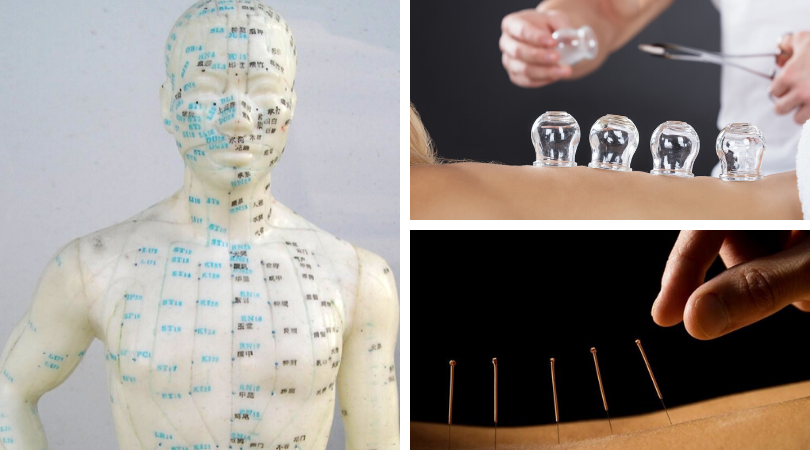
The art of Acupuncture is underpinned by a philosophy that explains the movement of Qi and how it is influenced by the environment. Each point has an application and function, and these points are used together to enhance the therapeutic effect. These points are along energy channels in the body known as meridians. Points along the channels were chosen due to being a greater source of, and influence on, Qi. The idea is to use points which have the strongest beneficial effect on Qi.
Dry needling technique does not take advantage of this philosophy or the knowledge of best needling practice indicated for each individual condition. Dry needling uses local points not necessarily on a meridian, and relies on triggering a local response in the muscle. It does not work on the point best connected to the issue, and doesn't address the cause of the problem.
What is notable is that even the most basic needling techniques like dry needling achieve results — indicating the effective potential of Acupuncture needling and bio-energy therapeutics.
The research is there
Long-term benefits of Acupuncture are well documented by both ancient and modern research, and recognised by the World Health Organisation.
"For thousands of years, long before Western scientists discovered the laws of quantum physics, the Asians have honoured energy as the principal factor contributing to health and well-being."
— Bruce H. Lipton, PhD, The Biology of Belief
The influence of quantum mechanics on biology and health deserves its own article. Let's get together again, and I'll look at it in more detail next time.