

Most people talk about being stressed today. They may not always realise that stress is causing their problems.
I've practised acupuncture for 35 years. I am over on the coast at Hastings Point. Some of the most common things people come to see me with are a tight jaw, a sore neck and shoulders, an unsettled stomach, headaches, or waking at 3am and not getting back to sleep. When we talk it through, stress is often part of the picture.
October is Mental Health Month in NSW. The theme this year is “A Little Connection Goes a Long Way”. How you feel and what is happening in your body are closely linked, and talking to someone is a good place to start.
What happens in the body under long-term stress
When you're under pressure, your body releases stress hormones such as adrenaline and cortisol. Your heart rate goes up, your muscles tighten and your digestion slows down. This is a normal response, and in short bursts it helps you deal with what's in front of you.
Problems can start when the pressure goes on for weeks or months. It might be work, money, family or caring for someone. If your body stays in that state, your muscles stay tight, your sleep gets lighter and your digestion can stay unsettled. Over time, these are the symptoms people notice.
The places it shows up
These are the areas I see most often.
- Jaw. Clenching or grinding your teeth, often at night. A sore jaw or a headache when you wake up. Some people only find out when their dentist mentions it.
- Neck and shoulders. Tight, sore muscles, often worse at the end of the working day.
- Gut. Bloating, a knot in the stomach, a change in appetite, or bowels that are less regular than usual.
- Sleep. Trouble switching off at night, or falling asleep and then waking at 3am.
- Head. Tension headaches, pressure across the forehead, or feeling foggy.
You might have one of these or several. Some people have had them for so long they no longer notice them.
How Chinese medicine looks at it
In Traditional Chinese Medicine, ongoing stress is often linked to the Liver. This is the Liver as TCM describes it, not the liver your GP checks with a blood test. In TCM, the Liver keeps Qi, the body's energy, moving smoothly. Long-term stress can slow that movement down. TCM calls this Liver Qi stagnation.
The Liver channel and the Gallbladder channel run up the sides of the body, through the shoulders and neck to the head. This is one reason TCM links stress with tension in the neck, shoulders, jaw and temples. Liver Qi stagnation can also affect digestion. On the TCM body clock, 1am to 3am is Liver time, so if you wake in those hours, I'll ask about it.
What a treatment is like
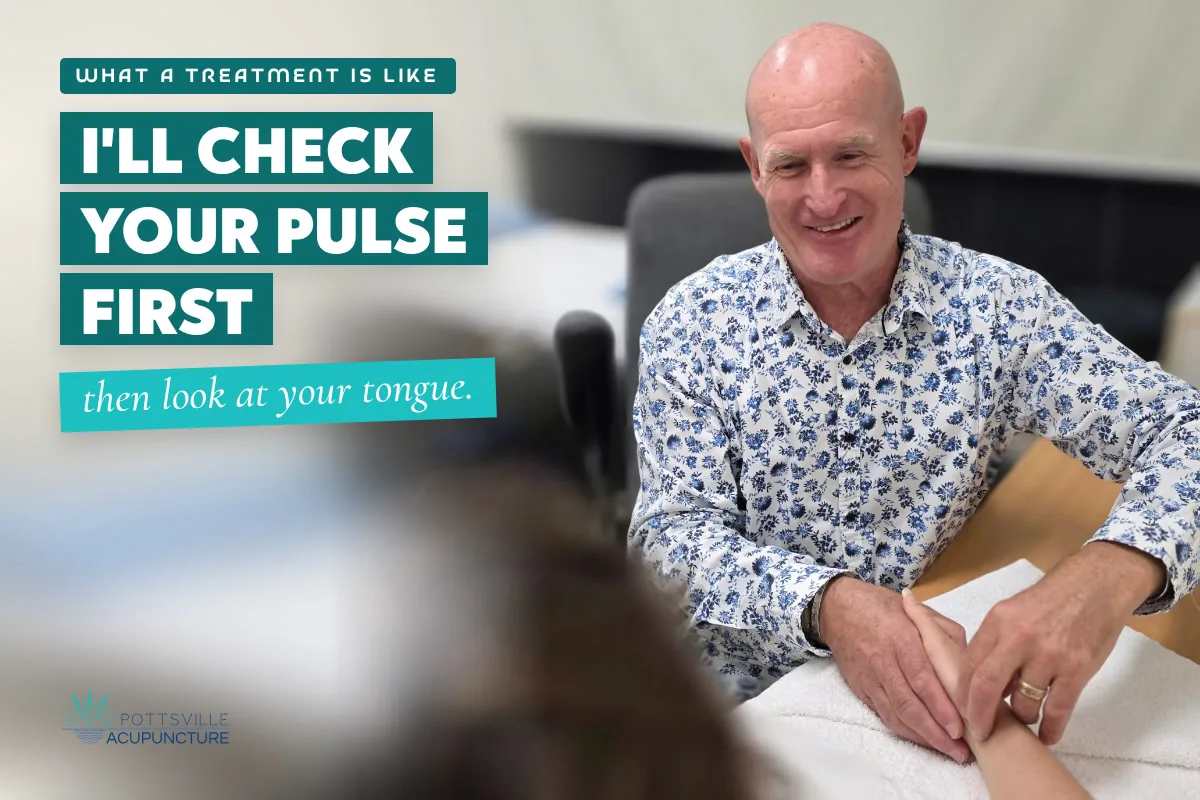
At your first visit, I'll ask about the symptoms that brought you in, how they started and what makes them worse. I'll also ask about your sleep, digestion and energy, and whether there have been any changes in your workload or lifestyle. I read your pulse at the wrist and look at your tongue.
Acupuncture points are chosen near the area of concern and on other parts of the body. This allows me to treat the cause as well as the symptoms. Most people feel a light tap, or nothing at all, and then a heavy, relaxed feeling. Many people find the treatment calm and restful, and some fall asleep on the table.
Acupuncture may assist with the relief of symptoms such as neck and shoulder tension, jaw tension and disturbed sleep. It works alongside your GP and any other support you have. How often you come in depends on where you sit along our Levels of Care.
When to see your GP
Please see your GP if stress, your mood or your sleep is affecting your daily life, your work or your relationships. See your GP too if your symptoms are new or getting worse. Ongoing changes in your bowels, weight loss you can't explain, or headaches that keep getting worse should be checked by your GP first. For sudden or severe chest pain or headache, call 000.
Your GP can look at the whole picture with you. If it's right for you, they can also put together a mental health treatment plan.
If you're struggling, please reach out. Lifeline is available 24 hours a day on 13 11 14. If you or someone else is in immediate danger, call 000.
A place to start
This month's theme is a good reminder to reach out, whether that's to a friend, your GP or us. If your jaw, neck or sleep has been bothering you for a while, you're welcome to come in. Book a first consultation and we'll work out a plan together. If this sounds like someone you know, feel free to pass it on.
— Dr Mal